
Order Management System for Layaways, Work Orders, Deliveries and Phone Orders
MicroBiz Cloud includes a built-in order management system that allows retailers to manage layaways, phone orders, and in-store customer orders from a single dashboard, eliminating the need for separate spreadsheets or manual tracking methods. With order management built directly into MicroBiz, retailers can track every order in one place regardless of how it was placed or how it will be fulfilled, giving staff full visibility into outstanding orders and reducing the risk of missed pickups or delivery commitments.
Ways the customer order management system included in MicroBiz can improve your business
Sell Items not in Stock via Special Orders
Manage sales of out-of-stock items from the initial order through vendor shipment
Manage Layaways and Installment Sales
Manage layaway transactions and holds and take multiple payments on a customer order.
Send Invoices with Payment Links
Send invoices with payment links with integrated payments, allowing your customers to pay outstanding balance online.
Run a High-Margin Service Department
Check-in items to be repaired, document service request, add parts and services
Customer Orders
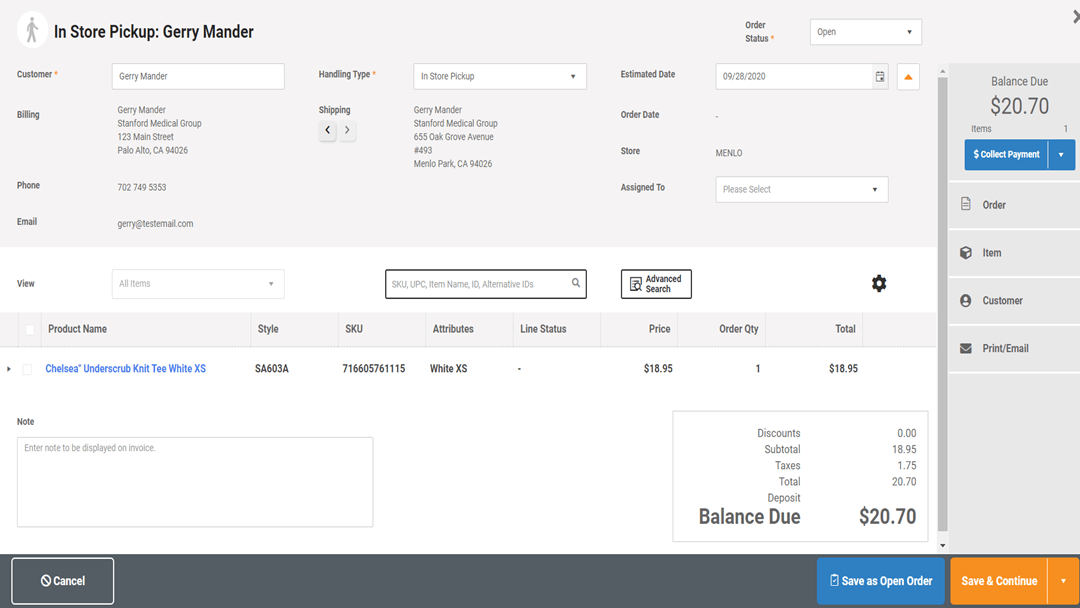
MicroBiz Cloud allows you to manage the sale of items that customers don't take with them immediately, giving retailers a structured way to track orders from creation through to final pickup or delivery.
Customer order management in MicroBiz includes:
- Attach a customer to the order
- Set and update order status as the job progresses
- Define a due date and handling type
- Print pick-up slips for the order
- Add notes to document order details
Customer orders can be transferred directly to the register at the time of payment, allowing staff to complete the order transaction and sell any additional cash-and-carry items together on the same receipt — keeping the checkout process simple even when a sale involves both an existing order and new items.
Quotes, Estimates and Invoices
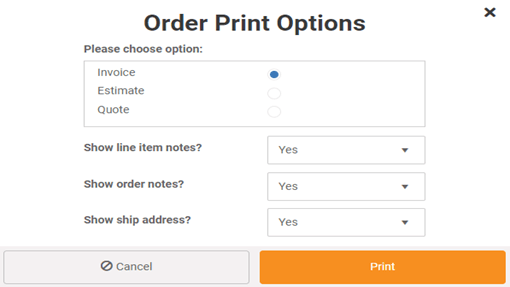
MicroBiz Cloud allows you to generate full page quotes, estimates, or invoices directly from an order record, giving retailers the right document type for any stage of the sales process without needing a separate quoting tool.
Quote, estimate, and invoice options in MicroBiz include:
- Print a full page quote, estimate, or invoice based on the current need
- Choose whether order notes are included on the printed document
This flexibility allows staff to provide customers with a formal quote before a sale is finalized, an estimate for a custom or service-based order, or a complete invoice once the transaction is ready to be billed — all generated from the same order record without duplicate data entry.
Layaways, Deposits and Phone Orders
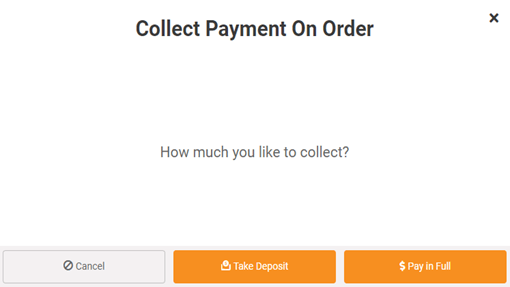
MicroBiz Cloud's Orders in Progress capabilities allow retailers to manage layaways and phone orders from a single system, giving staff a structured way to reserve merchandise and collect payment over time.
Layaway and phone order features in MicroBiz include:
- Add items to an order and attach a customer record
- Collect full payment or a partial deposit at the time the order is placed
- Set an expected pickup date
- Enforce minimum deposit rules at the store level
- Add notes directly to the order
Items attached to a layaway or phone order are automatically moved from open stock to committed stock, ensuring the merchandise isn't sold to another customer while the order is in progress. This gives retailers accurate inventory counts while still honoring reserved items for customers paying over time.
Special Ordering of Out of Stock Items
MicroBiz Cloud includes a dedicated special order workflow for managing the sale of items not currently in stock, allowing retailers to take the order, source the item from a vendor, and fulfill the customer's request without losing track of the details along the way.
Special order capabilities in MicroBiz include:
- Items are listed on a dedicated special order inventory screen, making it easy to add them to vendor purchase orders
- Special order items are tagged throughout the ordering and fulfillment process so they can be tracked differently than standard inventory
- When a vendor shipment containing a special order item is received, MicroBiz automatically triggers an alert
- The received item is automatically linked back to the original customer order
This automated linking between receiving and the original order means staff can immediately notify the customer that their special order is ready for pickup or delivery, without manually cross-referencing purchase orders against customer requests.
Store Pick-up, Delivery and Shipping of Orders
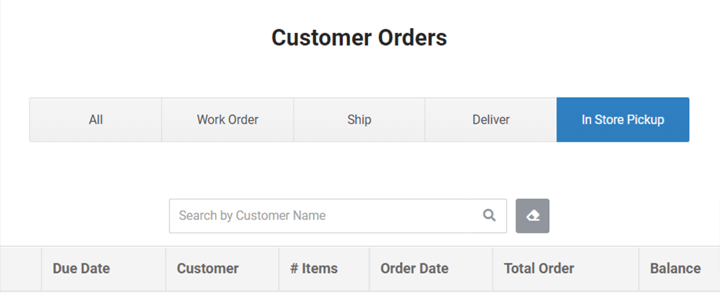
MicroBiz Cloud allows retailers to designate how each phone order or order in progress will be fulfilled, giving staff a clear, consistent way to manage orders regardless of how the customer ultimately receives their purchase.
Order fulfillment options in MicroBiz include:
- Designate orders for in-store pickup, local delivery, or third-party shipment
- Add notes to the order and assign it to a specific employee
- Update order status as it moves through processing
- Set an expected pickup date and time for in-store pickup orders
With fulfillment method, status, and employee assignment all tracked on the order record, staff and managers have full visibility into where every order stands — whether it's waiting for the customer to pick it up, scheduled for local delivery, or ready to ship through a third-party carrier.
Service/Repair Department
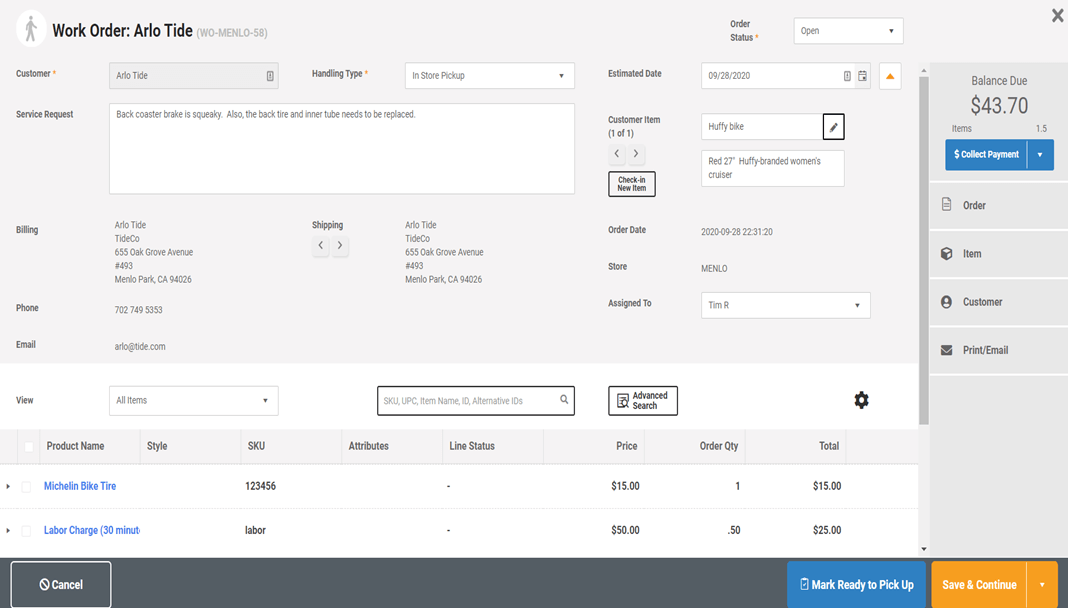
MicroBiz Cloud allows retailers to run a full repair or service department using the same order management system used for retail orders, giving service-based businesses a single platform to manage both product sales and repair work.
Service and repair department features in MicroBiz include:
- Check in customer items for service or repair
- Attach a customer record to the work order
- Assign the job to a specific employee
- Set an estimated completion date
- Add parts and labor to the order
- Manage order status as the job progresses
- Collect a deposit at intake
- Print full page quotes and estimates
For more information on the work order capabilities of MicroBiz, click here.
Send Delivery Schedule to Google Maps
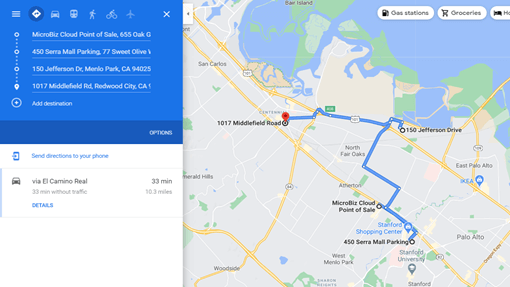
MicroBiz Cloud includes a delivery management view that allows retailers to filter and organize delivery orders before sending them directly to Google Maps for route planning, eliminating the need to manually enter addresses one at a time.
Delivery scheduling capabilities in MicroBiz include:
- Filter delivery orders by order status, order date, due date, assigned employee, or store
- Send selected delivery addresses to Google Maps with one click
- Arrange the sequence of deliveries in Google Maps to optimize routing
- Print the routing map or send directions via email or text directly to your phone
Once sent to your phone, the optimized route displays directly in the Google Maps app, allowing delivery drivers to navigate turn by turn without re-entering addresses — making it easy to plan an efficient delivery run across multiple stops.
One-Touch Ordering/Fulfillment Options for Special Orders
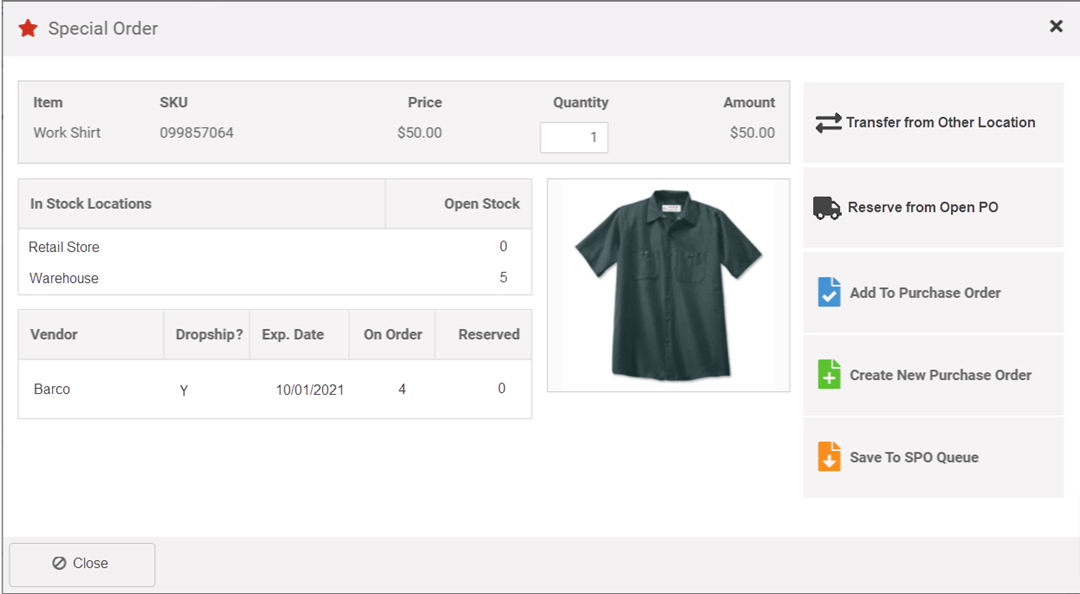
MicroBiz Cloud speeds up the special order process with auto-fulfillment features that let staff source out-of-stock items quickly during order-taking, without needing to switch to a separate purchasing screen.
One-touch fulfillment options in MicroBiz include:
- Automatically create a new vendor purchase order containing the special order item while taking the order
- Reserve a special order item already included on an open vendor purchase order
- Check stock availability for the item at other store locations
- Mark a special order item for further review before fulfillment
These auto-fulfillment options give staff multiple fast paths to source a special order item at the moment the sale is made, reducing the number of manual steps needed to get an out-of-stock item on its way to the customer.
Order Management Grid Filters
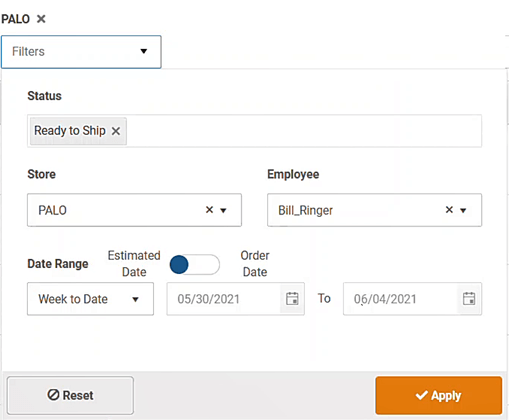
MicroBiz Cloud's order management dashboard includes a set of filters that allow retailers to quickly organize and prioritize open orders, making it easier to plan daily workflows for delivery, pickup, and service teams.
Order grid filtering options in MicroBiz include:
- Handling type, such as ship, deliver, or pick up
- Order status, such as ready to deliver or ready for pickup
- Assigned employee
- Promise date given to the customer
These filters make it easy to build accurate delivery schedules, keep service technicians focused on the right jobs, and ensure no order slips past its promised date — giving managers a clear, real-time view of everything currently in progress across the store.
Calendar-based Service Task Scheduler
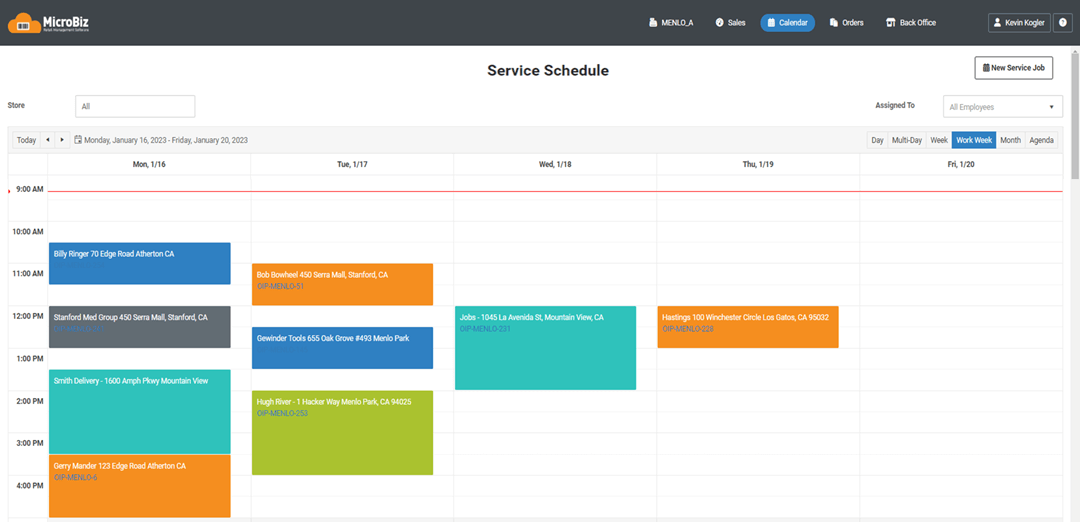
MicroBiz Cloud includes a calendar-based scheduler that allows retailers to create and manage scheduled tasks — such as deliveries, appointments, or repair slots — directly from the order record, keeping scheduling tied to the actual order rather than a separate calendar tool.
Service task scheduler features in MicroBiz include:
- Create a scheduled task directly from the order record and assign it to an employee
- View the calendar in monthly, weekly, or daily formats
- Filter the calendar by assigned employee
- Bulk print invoices or delivery slips from the order management grid for drivers
- Drag and drop calendar events to quickly reschedule
This calendar-based approach gives managers a clear visual overview of upcoming deliveries, appointments, and repair jobs, while making it simple to adjust schedules on the fly and hand drivers or technicians exactly what they need before heading out.
Flexible Sales Tax Set Up
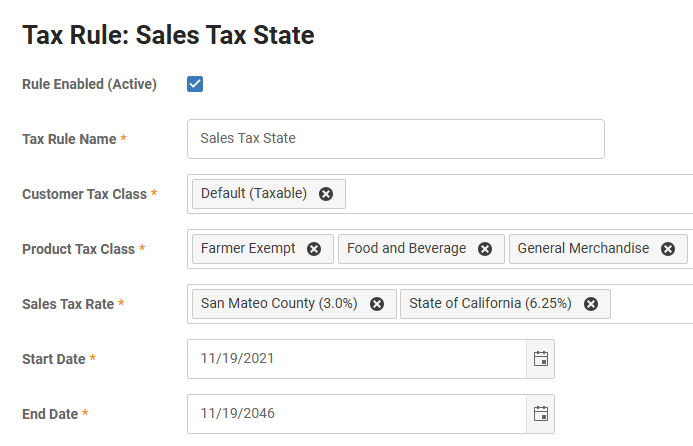
MicroBiz Cloud includes flexible sales tax configuration that allows retailers to accurately handle tax-exempt products, tax-exempt customers, and multiple tax jurisdictions — all from within the same system.
Sales tax configuration options in MicroBiz include:
- Designate specific products or services as tax-free
- Set up customers as fully tax-exempt or taxed at a reduced rate
- Configure multiple tax jurisdictions to support different tax rates across locations
MicroBiz also automatically applies the correct tax calculation based on how an order is fulfilled. Orders designated for in-store pickup are taxed based on the store's physical address and associated tax rate, while orders designated for delivery or shipment are taxed based on the customer's shipping address — ensuring tax compliance regardless of how the order is fulfilled.
FAQs
Q. Can I easily convert quotes to invoices?
A. Yes, quotes can be converted to an invoice by changing the order status to 'open' and printing the order in the 'invoice' format. The order number and total will not change.
Q. Can I set-up a custom order workflow for my store?
A. Users can use two customizable ‘user defined’ Order Status fields to customize MicroBiz Cloud for their needs.
Q. Can I take an order and sell items on the same receipt?
A. Yes, you can transfer an order to a front register transaction, and then sell other 'cash and carry' items in the same register transaction.
Q. Are shipments and deliveries of customer orders taxed differently than in-store pick-ups?
A. The customer order module taxes in-store pick-ups based on that tax rate for your store but shipments and deliveries are taxed based on the customer's shipping address.
Want to learn more?
Sign up for a free trial store. No credit card required.
Schedule a one-on-one online demo with a sales rep.
Submit a question or request using a web form.
Or call our sales department at 702 749-5353 option 2